Transformasi Pembelajaran Digital melalui Platform Thunkable bagi Siswa di SMA Negeri 2 Kota Sorong
DOI:
https://doi.org/10.62383/transformasi.v2i3.1905Keywords:
Digital Literacy, Digital, Educational Innovation, Learning Transformation, ThunkableAbstract
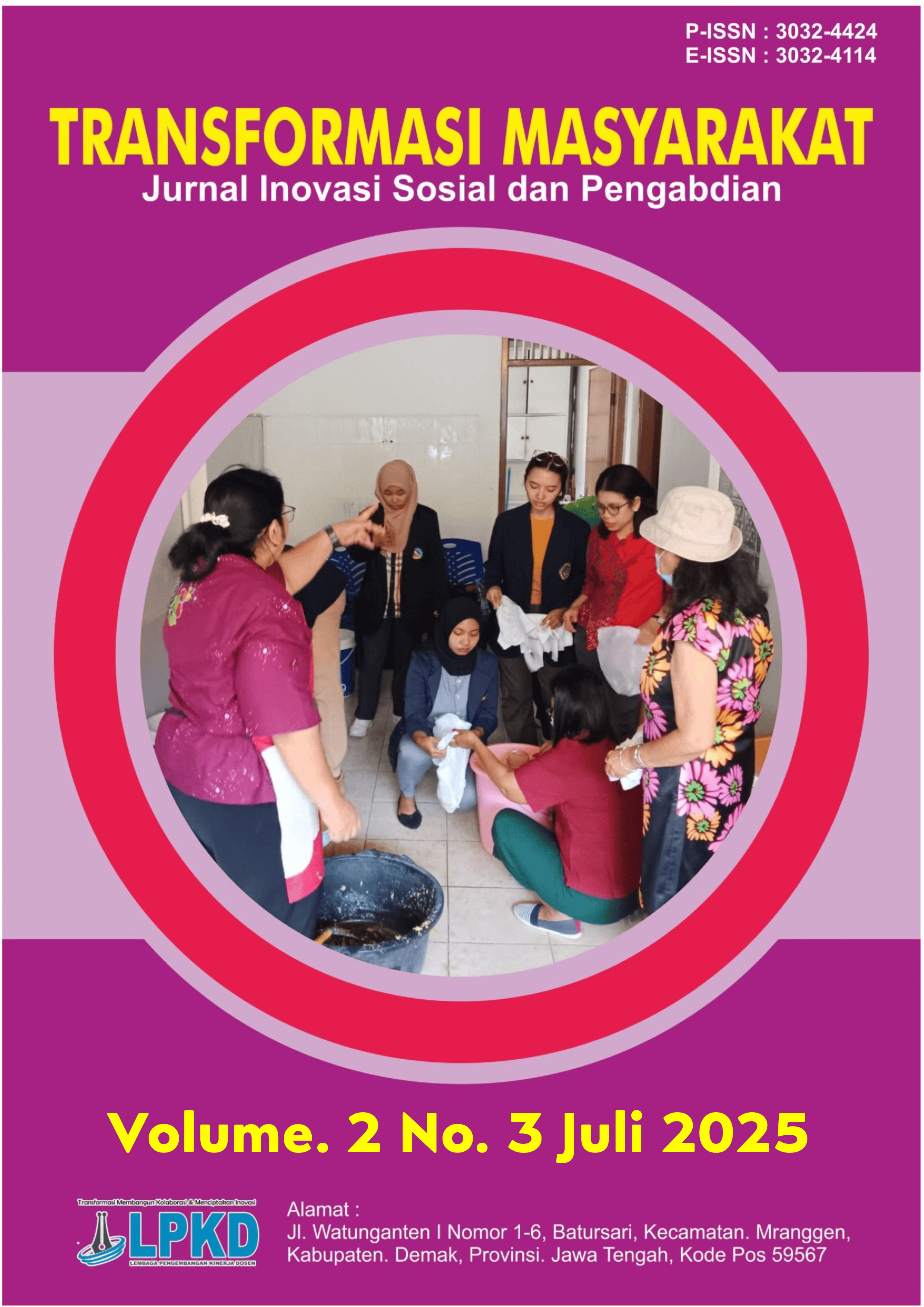
The transformation of education in the digital era demands inclusive, creative, and relevant learning innovations in line with technological developments. To address these challenges, utilizing digital platforms is a strategic step in driving the digitalization of education. One innovative solution that is becoming widely used is no-code platforms like Thunkable, which enable users, including students, to create applications without having to master complex programming. This article reviews the results of a community service activity conducted at SMA Negeri 2 Sorong City, focusing on improving digital literacy and strengthening 21st-century skills through training in creating educational applications based on Thunkable. This activity utilized experiential learning and project-based learning approaches, implemented through hands-on training, interactive demonstrations, independent practice, and participatory evaluation. This training not only targeted students as the primary participants but also involved teachers as facilitators who accompanied the learning process and encouraged the application of training outcomes in classroom activities. Evaluation results showed a significant increase in student enthusiasm, critical thinking skills, and creativity in designing simple educational applications tailored to learning needs and local contexts. Despite obstacles such as limited digital devices and uneven internet access, this activity still succeeded in creating an innovative and transformative learning space. Furthermore, this training makes a significant contribution to supporting the implementation of the Pancasila Student Profile, particularly in the areas of digital literacy, independence, mutual cooperation, and creativity. It also serves as an effective means to instill the value of digital responsibility and foster a learning culture that is adaptive to technological change. The success of this program demonstrates that a simple yet applicable technology-based approach like Thunkable can be replicated in other schools, particularly in the 3T (disadvantaged, frontier, and outermost) regions, with the support of structured and collaborative training.
References
Banarsari, A., Nurfadilah, D. R., & Akmal, A. Z. (2023). Pemanfaatan Teknologi Pendidikan Pada Abad 21. Social, Humanities, and Educational Studies (SHES): Conference Series, 6(1), 459. https://doi.org/10.20961/shes.v6i1.71152
Edwara. (2023, Oktober 18). Ketikpinter, aplikasi pembentuk karakter Profil Pelajar Pancasila dari mahasiswa UNY. Eduwara. https://eduwara.com/ketikpinter-aplikasi-pembentuk-karakter-profil-pelajar-pancasila-dari-mahasiswa-uny
Febriyanti, K. N., & Hidayat, W. N. (2024). Pengembangan Media Pembelajaran Mobile Learning Berbasis Android Berbantuan Thunkable dengan Model Project Based Learning pada Materi CSS Kelas X Program Keahlian PPLG. Journal of Innovation and Teacher Professionalism, 2(2), 184–194. https://doi.org/10.17977/um084v2i22024p184-194
Firmansyah, F. (2023). Implementasi mata pelajaran Informatika untuk memperkuat Profil Pelajar Pancasila di SMA. Jurnal Teknologi Pendidikan, 5(2), 102–115.
Haqqoni, N., Adhita, D., & Zahid, A. (2024). Peran Teknologi dalam Mendukung Pembelajaran Berdiferensiasi untuk Mewujudkan Profil Pelajar Pancasila: Studi Literatur. Karimah Tauhid, 3(8), 8909–8921. https://doi.org/10.30997/karimahtauhid.v3i8.14527
Inmas. (2023). Terangkan hubungan antara informatika dengan Profil Pelajar Pancasila. INMAS Research Bulletin.
Kemdikbudristek. (2022). Kurikulum Merdeka: Penguatan Projek Penguatan Profil Pelajar Pancasila. Jakarta: Kemendikbudristek.
Literasi, P., Melalui, T., Software, P., Berbasis, D., & Programming, C. (2025). Jurnal merpati. 6(2), 53–63.
Mahdalena, F. (2025). Kebijakan Sekolah Dalam Meningkatkan Kedisiplinan Siswa Di Mtsn 2 Aceh Jaya. Jurnal Multidisiplin Inovatif, 9(1), 2246–6110.
Manuhutu, M. A., Khahar, M., & Uktolseja, L. J. (2021). Perancangan sistem informasi kursus berbasis web pada Dalyes Course. Jurnal Elektro Luceat, 7(1), 1–14. https://jurnal.poltekstpaul.ac.id/index.php/jelekn/article/view/366/249
Melwida, L., Syahrial, S., & Nurrahmi, R. (2024). Penguatan Profil Pelajar Pancasila melalui experiential learning menggunakan aplikasi pembelajaran interaktif. Jurnal Pendidikan Inovatif, 7(1), 45–57.
Mewilda, L., Rianto, S., & Tanamir, M. D. (2024). Pengaruh Penerapan Model Experiential Learning Terhadap Motivasi Belajar Geografi Peserta Didik Fase E SMAN 1 Guguak. Jurnal Review Pendidikan Dan Pengajaran, 7(3), 7210–7216.
Purbalingga Dinkominfo. (2022, September 22). Wujudkan Profil Pelajar Pancasila melalui literasi digital. https://www.purbalinggakab.go.id/wujudkan-profil-pelajar-pancasila-melalui-literasi-digital
PWM Jateng. (2022, Agustus 20). Menjadi Pelajar Pancasila di Era Digital. https://pwmjateng.com/menjadi-pelajar-pancasila-di-era-digital
Rogo, I., & Radiana, U. (2024). Strategi Dan Tantangan Transformasi Digital Dalam Pengembangan SDM Pendidikan. Journal of Mandalika Literature, 5(4), 2745–5963.
Shahin, M., Gonsalvez, C., & Whittle, J. (2021). How secondary school girls perceive computational thinking practices through collaborative programming with the Micro:bit. arXiv preprint. https://arxiv.org/abs/2112.09676
Shahin, M., Ilic, O., Gonsalvez, C., & Whittle, J. (2020). The impact of a STEM-based entrepreneurship program on the entrepreneurial intention of secondary school female students. arXiv preprint. https://arxiv.org/abs/2012.03746
Shi, W., Malachowsky, S., El Glaly, Y., Yu, Q., & Krutz, D. E. (2020). Presenting and evaluating the impact of experiential learning in computing accessibility education. arXiv preprint. https://arxiv.org/abs/2002.06445
Downloads
Published
How to Cite
Issue
Section
License
Copyright (c) 2025 Transformasi Masyarakat : Jurnal Inovasi Sosial dan Pengabdian

This work is licensed under a Creative Commons Attribution-ShareAlike 4.0 International License.