Pendampingan Sertifikasi Halal Gratis Berbasis Self-Declare bagi UMKM Desa Krajankulon Kendal
DOI:
https://doi.org/10.62383/transformasi.v1i4.587Keywords:
Halal Certification, MSMEs, KrajankulonAbstract
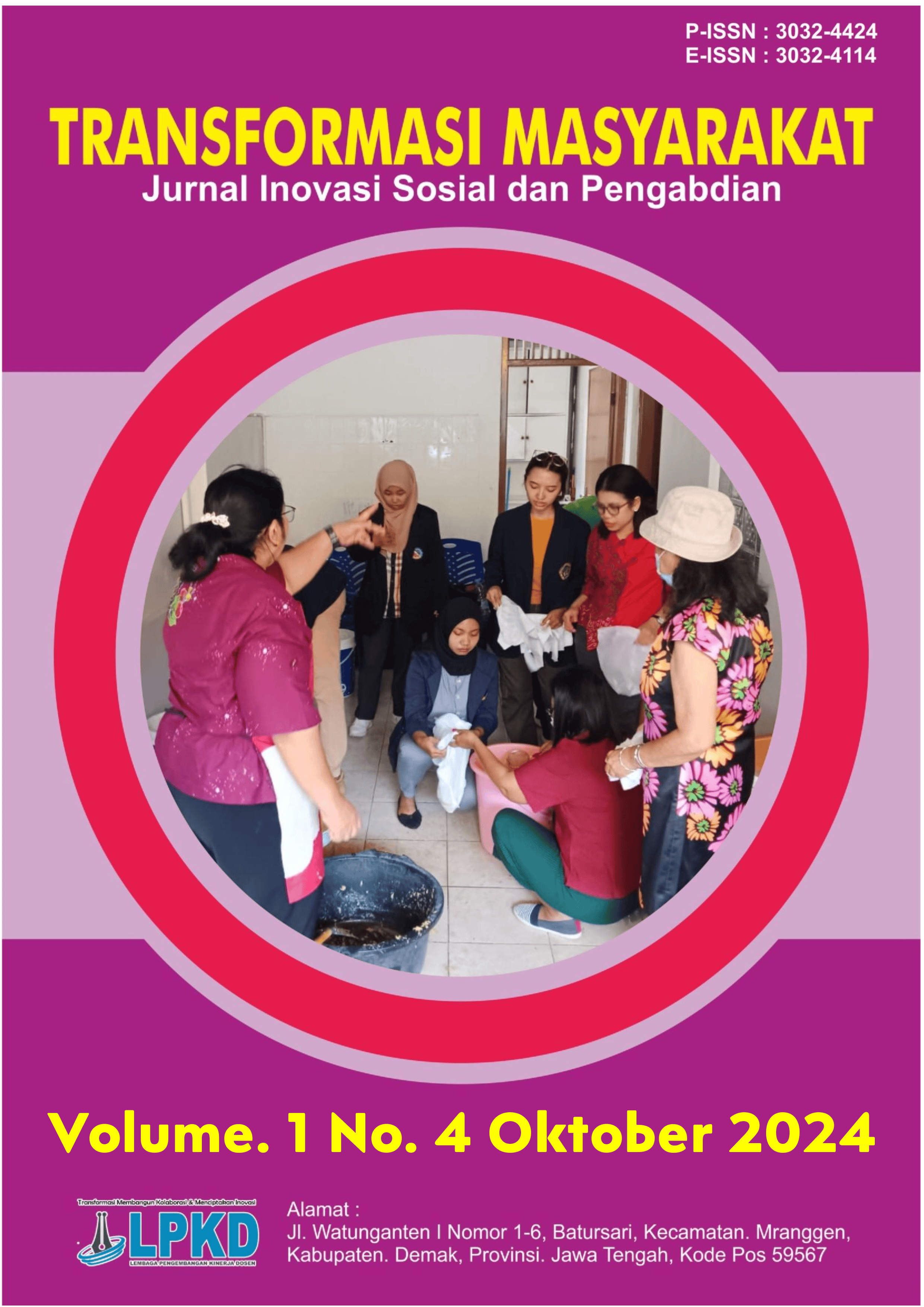
This research is motivated by the support of to apply for Halal certification through MIT-18 Post-109 UIN Walisongo Semarang KKN Students. This service aims to help micro, small and medium enterprises in Krajankulon village to apply for Halal certification independently through the Free Halal Certification Program. The activity carried out by MIT-18 Post-109 UIN Walisongo Semarang KKN students lasted for one month starting from July 2024 involving 15 stakeholders. The methods used include lectures, questions and answers, and online registration tutorials in collaboration with Pendampingan Produk Halal (PPH) of the Ministry of Religion of Kendal Regency. The results of this activity show an increase in participants' awareness and understanding of the importance of Halal certification, as well as the acceleration of the business legalization process through an easily accessible and free independent declaration system. This support is expected to increase the value of products and support business sustainability through strong legitimacy. Micro, small and medium enterprises play an important role in the Indonesian economy, especially in Muslim-majority societies where halal products are highly regarded. Halal certification is not only important for consumers, but also makes products more competitive in the market. However, there are still many in Indonesia that have not received halal certification, including in Krajangkulon Village, Kendal Regency. This is due to lack of information, lack of understanding of the certification process, and administrative obstacles such as obtaining a Company Identification Number (NIB). Therefore, this study highlights the importance of intensive support and socialization to increase awareness and understanding of Halal certification in order to support sustainable economic growth and provide assurance to consumers.
References
Indah. (2023). Sertifikasi halal gratis 2023 dibuka ada 1 juta kuota. Diakses pada 17 Maret 2023, melalui Kemenag.go.id.
Pardiansyah, E., Abduh, M., & Najmudin. (2022). Sosialisasi dan pendampingan sertifikasi halal gratis (Sehati) dengan skema self-declare bagi pelaku usaha mikro di Desa Domas. Jurnal Pengabdian dan Pengembangan Masyarakat Indonesia, 1(2), 101–110. https://doi.org/10.56303/jppmi.v1i2.39
Rahayu Sri Utami, M., Sasmita, A., & Yusniar. (2022). Strategi UMKM dalam menghadapi pasar di masa pandemi COVID-19 (UMKM dalam bidang kuliner di wilayah Kecamatan Tanjung Morawa). Jurnal Widya, 3(1). https://doi.org/10.12345/jw.v3i1.1234
Salman Al Farisi. (2022). Peran UMKM (usaha mikro kecil menengah) dalam meningkatkan kesejahteraan masyarakat. Jurnal Dinamika Ekonomi Syariah, 9(1).
Siti Khayosatuzahro, & Istikomah. (2021). Program Sehati kemudahan pelaksanaan sertifikasi halal bagi UMKM. At-Thasarruf: Jurnal Kajian Ekonomi dan Bisnis Syariah, 3(2), 73.
Sudarsono. (2023). Jumlah UMKM di Kendal naik dua kali lipat. Diakses pada 25 Februari 2023, melalui https://www.rri.co.id/daerah/173502/jumlah-umkm-di-kendal-naik-dua-kali-lipat
Susilo, D., Ermayanti, I. N. C., Mardhiyyah, R. I., Zaidah Azmi, T., & Taufiqurrahman, H. (2023). Pendampingan pendaftaran NIB, P-IRT, halal self declare UMKM menuju go e-catalog Kabupaten Jombang. JPM: Jurnal Pengabdian Masyarakat, 3(4), 130–135. https://doi.org/10.47065/jpm.v3i4.736
UU No. 33 Tahun 2014 tentang Jaminan Produk Halal (JPH).
Warto, & Samsuri. (2020). Sertifikasi halal dan implikasinya bagi bisnis produk halal di Indonesia. Al-Maal: Journal of Islamic Economics and Banking, 2(1), 101.
Downloads
Published
How to Cite
Issue
Section
License
Copyright (c) 2024 Transformasi Masyarakat : Jurnal Inovasi Sosial dan Pengabdian

This work is licensed under a Creative Commons Attribution-ShareAlike 4.0 International License.