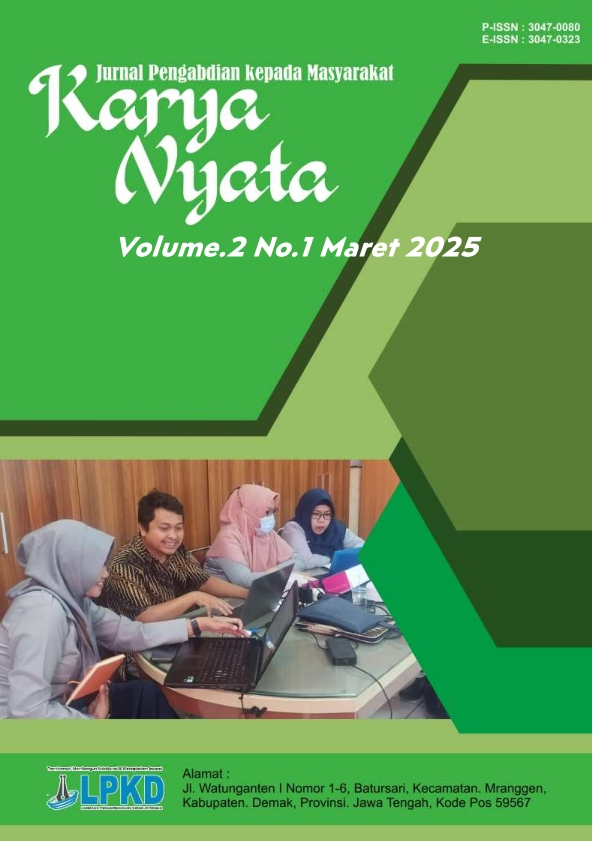
Produksi Video Microlearning di UPT SD Negeri 067098 Medan
DOI:
https://doi.org/10.62951/karyanyata.v2i1.935Keywords:
video, microlearning, learning methodAbstract
This study aims to produce a microlearning video product that can help teachers understand and learn good and correct teaching methods. Microlearning videos are chosen because of their ability to convey material concisely and effectively, making it easier for teachers to receive information quickly and accurately. The research method used is research and development (R&D) with a qualitative approach. The video production process includes several stages, namely material planning, scripting, shooting, video editing, and product evaluation. This research was conducted at UPT SD Negeri 067098 Medan. Based on the evaluation results, the resulting video was considered good and suitable for use for learning purposes. The results of the study indicate that the microlearning video produced can be an effective tool for teachers in understanding the concept of correct teaching methods. In addition, this video can also help improve the teaching skills of teachers at UPT SD Negeri 067098 Medan, as well as provide clear guidance in implementing effective teaching methods in the classroom.
References
Alfathoni, M. A. M., & Nadila, A. (2022). Strategi Kreatif Proses Produksi Program Acara Lentera Upu. Jurnal Geuthèë: Penelitian Multidisiplin, 5(2), 188-197.
Anderson, C. L., & Petch-Hogan, B. (2001). The impact of technology use in special education field experience on preservice teachers' perceived technology expertise. Journal of Special Education Technology, 16(3), 27-44.
Boulos, M. N. K., Maramba, I., & Wheeler, S. (2006). Wikis, blogs and podcasts: a new generation of Web-based tools for virtual collaborative clinical practice and education. BMC medical education, 6, 1-8.
Buchem, I., & Hamelmann, H. (2010). Microlearning: a strategy for ongoing professional development. eLearning Papers, 21(7), 1-15.
Cahyadi, R. A. H. (2019). Pengembangan bahan ajar berbasis ADDIE model. Halaqa: Islamic Education Journal, 3(1), 35-42.
Clark, R. E. (Ed.). (2001). Learning from media: Arguments, analysis, and evidence. IAP.
Hattie, J. (2008). Visible learning: A synthesis of over 800 meta-analyses relating to achievement. routledge.
Kebudayaan, K. P. (2020). Rencana strategis (Renstra) Kementerian Pendidikan dan Kebudayaan 2020-2024.
Price, S., & Oliver, M. (2007). A framework for conceptualising the impact of technology on teaching and learning. Journal of Educational Technology & Society, 10(1), 16-27.
Sya’Dian, T., Purba, R., & Nazarruddin, N. (2023). Pembuatan Video Profile TK Kartika I-1 Medan Helvetia. Jurnal Kabar Masyarakat, 1(3), 217-225.
Downloads
Published
How to Cite
Issue
Section
License
Copyright (c) 2024 Karya Nyata : Jurnal Pengabdian kepada Masyarakat

This work is licensed under a Creative Commons Attribution-ShareAlike 4.0 International License.