Peran Amil Zakat Resmi dalam Meningkatkan Transparasi dan Akuntabilitas Tata Kelola Zakat di Desa Mojopuro
DOI:
https://doi.org/10.62951/jpm.v2i4.2649Keywords:
Accountability, Amil Zakat, Mojopuro, Transparency, Zakat GovernanceAbstract
This study examines the role of officially appointed amil zakat in enhancing transparency and accountability in zakat governance in Mojopuro Village, Wonogiri Regency. Prior to this initiative, Mojopuro had no Zakat Collection Unit (UPZ), resulting in zakat practices that were traditional, undocumented, and lacking institutional oversight. Through a series of mentoring activities and seminars conducted from 8–18 September 2025, capacity-building efforts were directed toward prospective amil zakat, village officials, and religious leaders, focusing on zakat regulations, principles of transparency, and both vertical and horizontal accountability. The implementation methods included material delivery, group discussions, and consultative sessions, which ultimately led to the formal appointment of official amil zakat by the Wonogiri Regency BAZNAS. The findings demonstrate that the presence of official amil significantly improved the structural management of zakat, enhanced participants’ understanding of transparency and accountability, and strengthened coordination among amil, village administrators, and religious figures. These results indicate that village-based institutional mentoring can foster a transformative shift from traditional zakat practices toward professional, transparent, and accountable governance. This study thus offers a community-based empowerment model that can be replicated in other villages to improve zakat distribution effectiveness and build public trust in formal zakat institutions.
References
Badan Amil Zakat Nasional (BAZNAS). (2024). Outlook Zakat Indonesia 2024. Jakarta: Pusat Kajian Strategis BAZNAS.
Bakar, L. A., & Ismail, A. M. (2017). Accountability and transparency in Islamic institutions: A case study of zakat management. Journal of Islamic Accounting and Business Research, 8(3), 290.
Beik, I. S., & Arsyianti, A. D. (2016). Ekonomi zakat: Teori dan praktik. Jakarta: Rajagrafindo Persada.
Delima, E. R., & Zuwardi. (2024). Analisis efektivitas program Baznas dalam meningkatkan kesejahteraan ekonomi masyarakat menurut perspektif ekonomi Islam (Studi kasus: Baznas Kabupaten Sijunjung). Madani: Jurnal Ilmiah Multidisiplin, 2(9), 386.
Hafidhuddin, D. (2008). Zakat dalam perekonomian modern. Jakarta: Gema Insani Press.
Hanif Luthfi. (2018). Siapa amil zakat? Rumah Fiqih Publishing.
Ilchman, W. F., & O’Connor, K. (2018). Accountability in governmental and nonprofit organizations. New York: Springer.
Mahmudi. (2015). Manajemen kinerja sektor publik. Yogyakarta: UPP STIM YKPN.
Mardiasmo. (2009). Akuntansi sektor publik. Yogyakarta: Andi.
Mikael Edowai, et al. (2021). Akuntabilitas & transparansi pengelolaan keuangan daerah. Pusaka Almaida.
Nurzaman, M. S. (2016). Zakat and economic development: Micro and macro level evidence. Journal of Islamic Economics, Banking and Finance, 12(2), 159–176.
Qardhawi, Y. (2011). Fiqh az-zakah: A comparative study of zakah, regulations and philosophy in the light of the Qur'an and Sunnah. Jeddah: Scientific Publishing Centre.
Republik Indonesia. (2011). Undang-Undang Nomor 23 Tahun 2011 tentang Pengelolaan Zakat. Lembaran Negara Tahun 2011 Nomor 115.
Saad, R. A. J., & Farida. (2019). The role of governance in strengthening public trust on zakat institutions. International Journal of Zakat, 4(1), 37–50.
Zulkifli. (2020). Panduan praktis memahami zakat, infaq, shadaqah, wakaf, dan pajak. Kalimedia.
Aisyah, N., & Fitriani, R. (2022). Zakat governance and institutional performance: Evidence from Indonesia. International Journal of Islamic Economics and Finance, 5(2), 88–101.
Fauzi, A. (2023). Akuntabilitas lembaga zakat dan dampaknya terhadap kepercayaan muzaki di era digital. Jurnal Ekonomi Syariah dan Kebijakan Publik, 11(1), 45–60.
Huda, N., Rini, N., Mardoni, Y., & Putra, P. (2019). The analysis of factors affecting zakat payment: A study on muzakki in Indonesia. International Journal of Islamic Business and Economics, 3(2), 130–142.
Mahmoud, Y. K. (2021). Digital transformation in zakat institutions: Opportunities and challenges. Journal of Islamic Governance, 4(1), 22–35.
Sari, D. A., & Rahman, M. (2020). Efektivitas pendistribusian zakat produktif dalam pemberdayaan UMKM. Jurnal Ekonomi dan Pembangunan Islam, 4(3), 112–121.
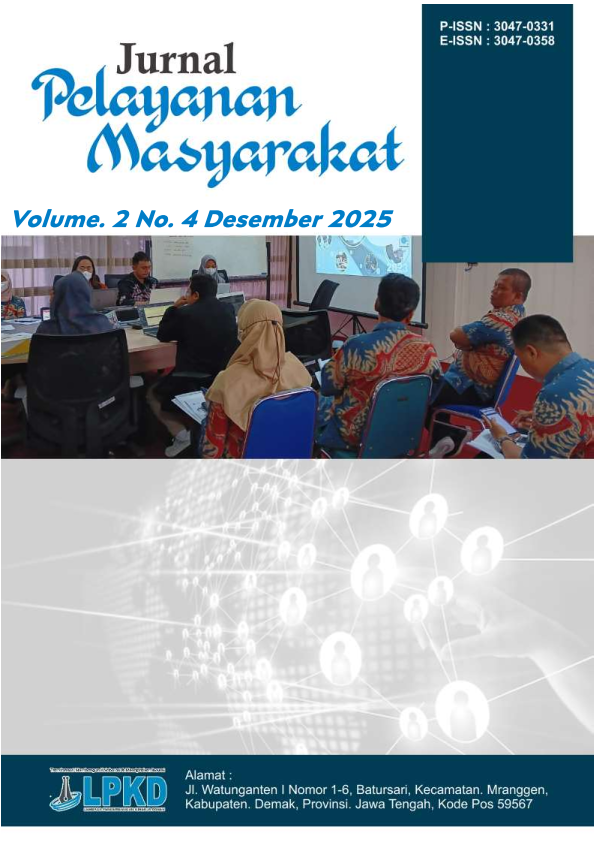
Downloads
Published
How to Cite
Issue
Section
License
Copyright (c) 2025 Jurnal Pelayanan Masyarakat

This work is licensed under a Creative Commons Attribution-ShareAlike 4.0 International License.