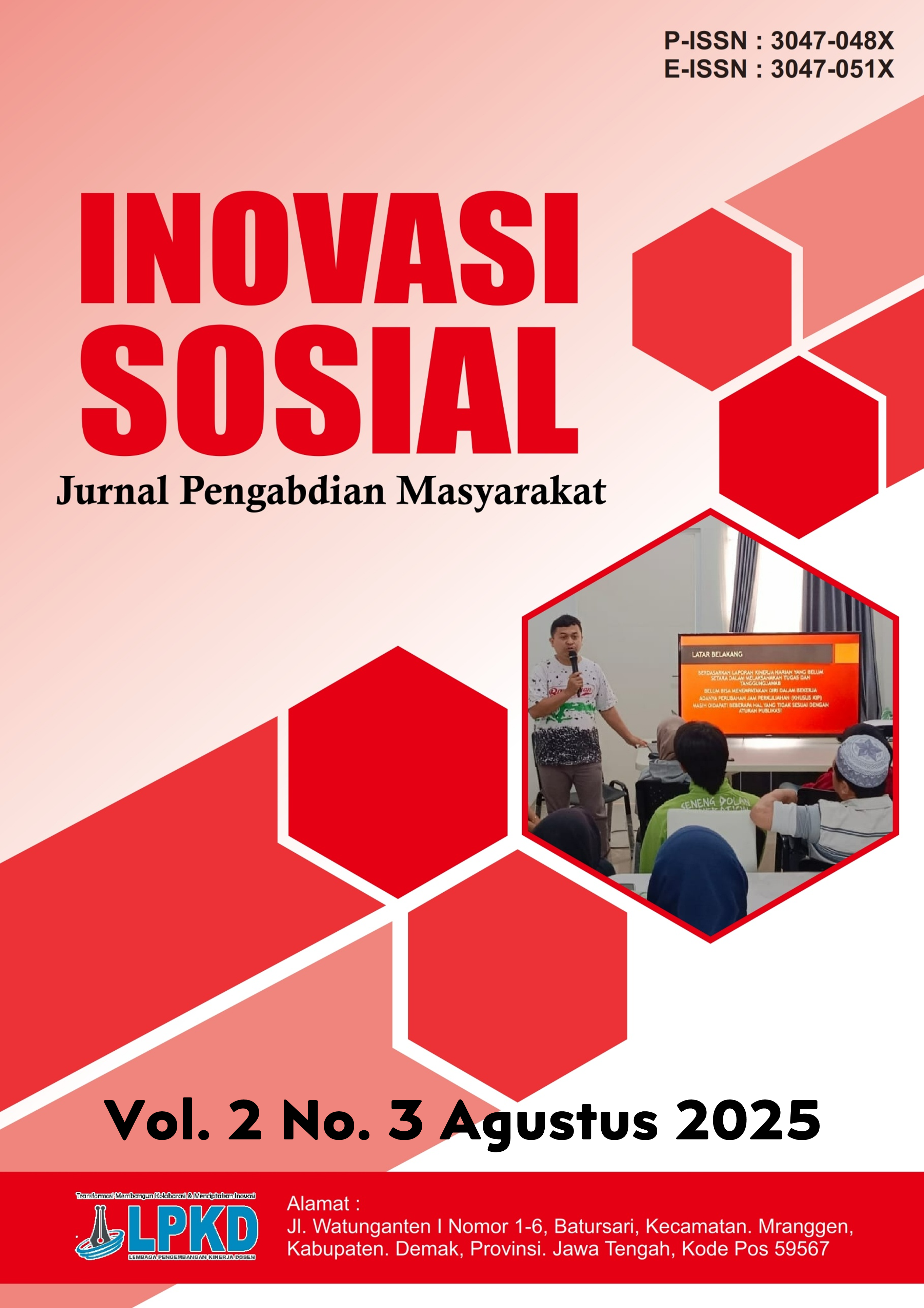
Scramble Fun Learning sebagai Inovasi Permainan Edukatif untuk Meningkatkan Literasi Membaca Siswa di SDN 1 Weet Kabupaten Maluku Barat Daya
DOI:
https://doi.org/10.62951/inovasisosial.v2i3.2023Keywords:
educational games, Learning Motivation, Reading Literacy, Scramble, Vocabulary DevelopmentAbstract
The low level of reading literacy in remote areas, such as the Muna Barat Daya Regency, poses a significant challenge in basic education. One innovation proposed to address this issue is the implementation of Scramble Fun Learning, an educational game-based approach designed to enhance reading literacy skills in students at SD Negeri 1Weet. This community service activity was carried out in two stages: a theoretical stage, which provided foundational understanding about the importance of literacy and gamification approaches, and a practical stage involving both teachers and fifth-grade students in word arrangement activities. Scramble Fun Learning combines game elements with a gamification approach by having students arrange words from random letters. The main objective is to train vocabulary recognition, strengthen reading comprehension, and increase student motivation to learn. In this activity, students are challenged to form words or sentences within a limited time, which not only stimulates their creativity but also makes the learning process more enjoyable and engaging. This method enables students to learn while playing, which is particularly effective in overcoming the boredom that often occurs in conventional learning. The results of this activity showed a significant improvement in student enthusiasm, active participation, and literacy skills. Many students who were previously disinterested in reading activities became more enthusiastic and motivated. Despite limitations in resources and time, the activity was still effectively implemented, thanks to creative adjustments made by the implementing team to ensure the material and activities were well received by both students and teachers. Overall, these findings indicate that Scramble Fun Learning is a highly potential and applicable approach to improving students' reading literacy, especially in areas with limited educational resources. This approach not only enhances literacy skills but also builds students' interest and motivation to continue learning.
References
Aliyah, I. (2017). Conceptual understanding of traditional markets in urban areas. Cakra Wisata, 18(2).
Aldo, D. (2019). Identification of healthy home sanitation with the multifactor evaluation process method. Journal of Science, Technology and Industry, 16(2), 121. https://doi.org/10.24014/sitekin.v16i2.5807
Anggraeni, M. D., & Aslamiyah, M. (2018). Overview of environmental sanitation in Blambangan Market, Banyuwangi in 2017. Scientific Journal of Public Health Students, 3(4), 1-10. https://doi.org/10.24036/student.v3i1.283
Amelia, C., Susaldi, S., & Rosidi, R. (2021). Analysis of hygiene and sanitation implementation in Kemiri Muka Market, Depok City. Journal of Environmental Health, 11(2), 99-102.
BPS, Muna Regency. (2024). Batalaiworu Sub-district in Figures.
Candra Susanto, P., Ulfah Arini, D., Yuntina, L., Panatap Soehaditama, J., & Nuraeni, N. (2024). Quantitative research concepts: Population, sample, and data analysis (A literature review). Journal of Multidisciplinary Science, 3(1), 1-12. https://doi.org/10.38035/jim.v3i1.504
Gusti, A. (2021). Environmental sanitation of traditional markets in Padang and Payakumbuh. Journal of Occupational Health Safety and Environment, 1(1), 3-11. https://doi.org/10.25077/jk3l.1.1.3-11.2020
Gusti, A., & Nilam Sari, P. (2020). Environmental sanitation of traditional market in Padang and Payakumbuh. International Journal of Applied Engineering Research, 15(3), 268-273. http://www.ripublication.com
Junaidi, J. S., & Meirisa, F. (2021). The effect of promotion, price, word of mouth, and layout on purchasing decisions at Diamond Supermarket Palembang City. Management Student Research Publication, 3(1), 22-36. https://doi.org/10.35957/prmm.v3i1.1613
Ministry of Health of the Republic of Indonesia. (2020). Regulation of the Minister of Health of the Republic of Indonesia Number 17 of 2020 concerning Healthy Markets. Ministry of Health, Jakarta.
Novianti, D., & Pertiwi, W. E. (2019). The implementation of environmental sanitation in elementary schools: 2018 inspection report from Kramatwatu Sub District, Serang District, Banten Province. Jurnal Kesehatan Lingkungan, 11(3), 175-188. https://doi.org/10.20473/jkl.v11i3.2019.175-188
Oluwole, P. D., Olowoporoku, O. A., & Odunsi, O. (2017). Assessment of environmental sanitation behaviour of market traders in selected markets in Ibadan, Nigeria. Advances in Environmental Research, 6(3), 231-242. https://doi.org/10.12989/aer.2017.6.1.025
Pramesti, P. U., & Fauziyah, S. (2022). Multifunctional building design: Market and public facilities in Semarang Regency. Journal of Vocational Service, 2(3), 173-176. https://doi.org/10.14710/Gading
Rahma, D. E., Paka, J., Rinando, A., Malik, M. Z., & Afifah, N. (2023). Effect of physical environmental conditions on air temperature changes at State University of Malang. 3(4), 151-162. https://doi.org/10.17977/um067v3i4p151-162
Rasmin, & Marhadi, A. (2022). Raha City, the Laino Central Market for the people of Muna. KABANTI: Jurnal Kerabat Antropologi, 6(2), 353-366.
Rizki Herwianti, C. O., & Wijayanti, Y. (2023). Overview of the condition of environmental sanitation facilities in traditional markets in Semarang City in 2022. HIGEIA Journal of Public Health Research and Development, 7(2), 303-311. https://doi.org/10.15294/higeia.v7i2.63501
Rusman Efendi. Market health status in terms of location and building in Ciputat Market and BSD Modern Market, South Tangerang City. Jurkessia, 9(1), 9-14.
Republic of Indonesia. (2014). Law of the Republic of Indonesia No. 7 of 2014 on Trade. Ministry of State Secretariat, Indonesia.
Sari, K. P. (2021). Analysis of temperature and humidity differences in ceramic walled rooms. Inkofar Journal, 1(2), 5-11. https://doi.org/10.46846/jurnalinkofar.v1i2.156
Sugiyono. (2019). Quantitative, Qualitative and R&D Research Methods. Bandung: PT Alfabet.
Sucipto, C. D. (2019). Environmental Health. Yogyakarta: Goshen Publishing.
Sukresno, H., Hakim, A., Wike, & Afandhi, A. (2019). Evaluation of waste management regulations in Minulyo traditional market, Pacitan, Indonesia. Jurnal Internasional Teknik dan Teknologi Sipil (IJCIET), 10(05), 806-814.
Setiamy, A. A., & Deliani, E. (2019). Innovation strategy and home industry performance in increasing consumer purchase interest in Medan's Sukaramai Market. Journal of Management Science METHONOMIX, 2(1), 45-52.
Tola, T. T., Soewarno, A. A., & Kunci, K. (2024). Redesign of Laino Raha Central Market in Muna District with green architecture emphasis. 2(1), 1-12.
Unaradjan, D. D. (2019). Quantitative Research Methods. Publisher Unika Atma Jaya Jakarta.
UNICEF, & WHO. (2020). Progress on household drinking water, sanitation and hygiene 2000-2017. New York Geneva: UNICEF & WHO.
WHO. (2022). Sanitation [Internet]. WHO. Available from: sanitation%2C WHO monitors global, management of wastewater and excreta.
Wolf, M. J., Emerson, J. W., Esty, D. C., & Sherbin, A. de. (2022). Environmental Performance Index [Internet]. Yale Center for Environmental Law & Policy. https://www.scopus.com/inward/record.uri?eid=2-s2.0-85058334284&partnerID=40&md5=ba59657f76bc374ef24c860e353164bd
Yuningsih, R. (2019). Health promotion strategy in improving the quality of environmental sanitation. 10(2), 107-118. https://doi.org/10.46807/aspirasi.v10i2.1391
Downloads
Published
How to Cite
Issue
Section
License
Copyright (c) 2025 Inovasi Sosial : Jurnal Pengabdian Masyarakat

This work is licensed under a Creative Commons Attribution-ShareAlike 4.0 International License.